Learn more about Shared Futures in the Netherlands
In the Netherlands many young people experience growing polarization and distance between different groups in society. Discussions about culture, religion, migration and identity can feel tense, at school, online and in the neighborhood. Shared Futures Netherlands starts with a pilot in the city of Lelystad, where young people from different backgrounds work together on their own and each other’s future. In doing so, they build trust, understanding and strengthen social cohesion.
Challenges and risks for youth in Lelystad
Dutch youth grow up in a prosperous country with many opportunities, but not everyone feels seen or treated fairly. Some young people struggle with feelings of exclusion, unfair treatment, or the idea that society is divided into “us” and “them”. Others find it difficult to really get to know peers from another neighbourhood, schooltype or religious background. In Lelystad these developments are clearly visible. Some young people with a migration background or with visible religious symbols encounter discrimination when looking for an internship or job. Other young people do not always realise how painful those experiences are for their peers or feel misunderstood themselves.
At the same time, many young people struggle with loneliness, uncertainty about the future, school dropout, financial worries or unstable work. In such circumstances it is tempting to withdraw into your own circle and to avoid difficult conversations. Shared Futures Lelystad invites precisely these young people to look beyond their own group and to explore together what kind of future they wish for themselves, for each other and for their city.
Shared Futures in the Netherlands
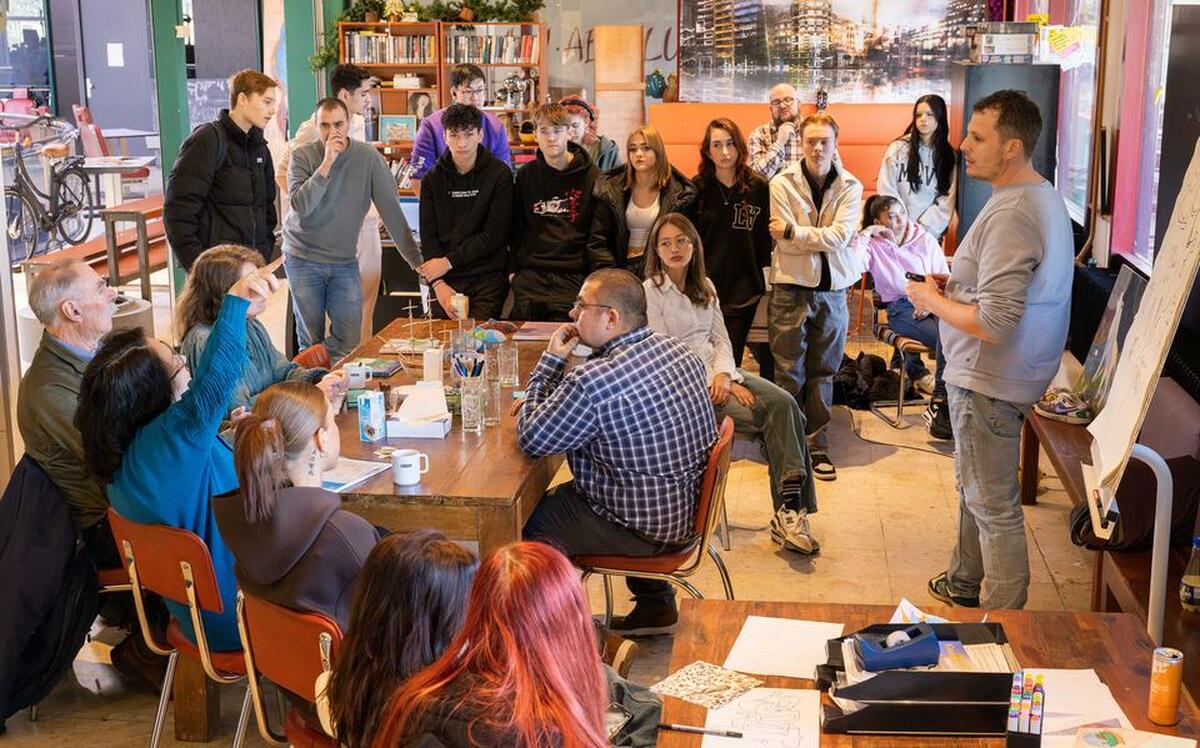
Shared Futures Lelystad is the first pilot in the Netherlands of Kerk in Actie’s international Shared Futures programme. The pilot started in September 2025 and is carried out by IDO Lelystad in close cooperation with the Protestant Church in Lelystad and several local partners, such as creative youth initiatives and an Islamic women’s charity. Young people with diverse religious and cultural backgrounds take part in a shared learning journey. They get to know one another, discover their talents and work together on a social project for their neighborhood or city. The focus is not on talking about differences, but about doing something together that benefits others.
Building opportunities and connection
The pilot is embedded in a strong local network, including IDO Lelystad, the Protestant Church in Lelystand and several local partners, such as creative youth initiatives and an Islamic women’s charity. Shared Futures supports young people in Lelystad in shaping their future through training in social entrepreneurship, leadership, communication and addressing prejudice. With individual coaching and a small development budget, participants work out a personal “future plan” that may lead to a neighbourhood initiative, creative project, internship, education or a first step toward their own small enterprise.
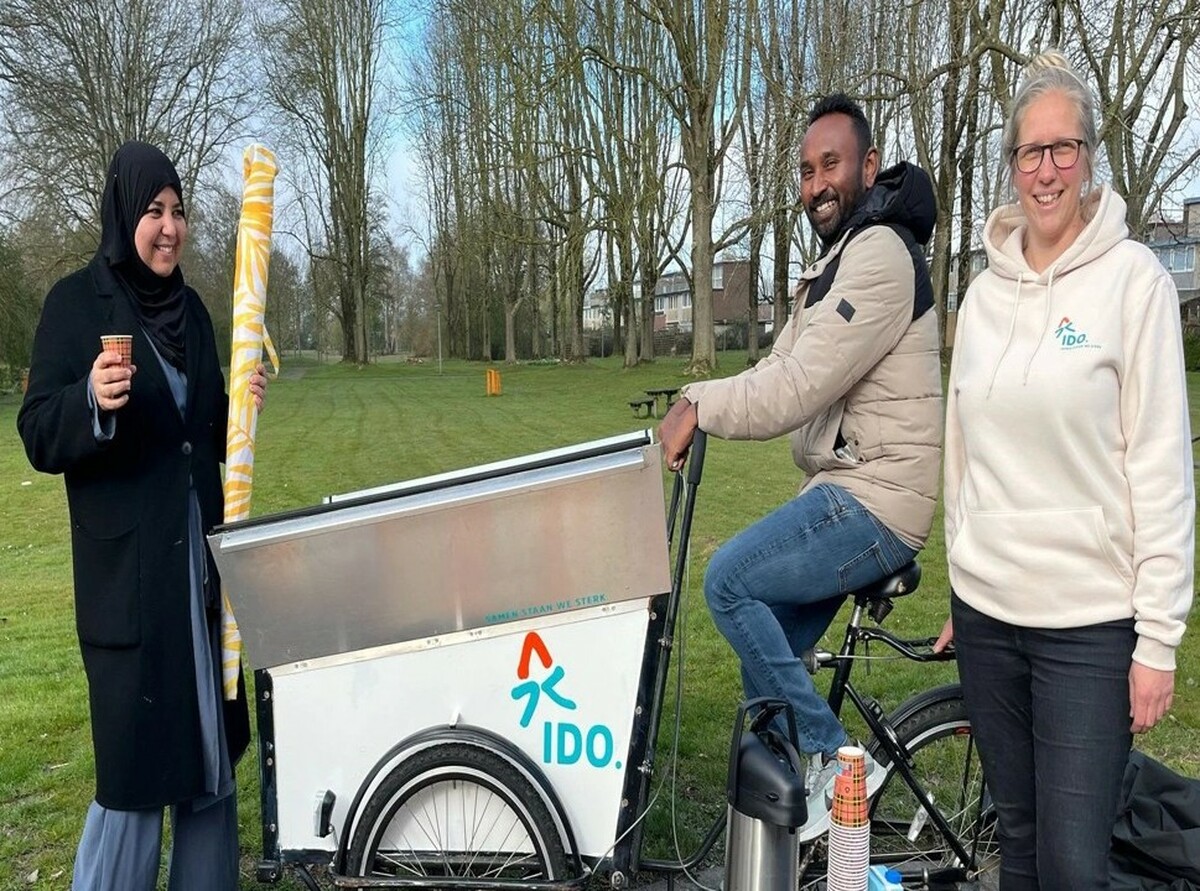 Growing understanding through encounter
Throughout the programme, young people engage in dialogue, share personal stories and visit each other’s communities, churches, mosques, youth centres and local initiatives. Together they organise a public activity that brings different groups in Lelystad together. These encounters challenge stereotypes, build trust and often lead to new friendships and networks across social and religious boundaries.
Inspiring for the wider community
The experiences from the pilot are valuable not only for the participants themselves, but also for Lelystad and for churches elsewhere in the Netherlands. The pilot contributes to a broader conversation about how churches, mosques and social organisations in the Netherlands can work together for peaceful coexistence, equal opportunities and connection between people. The lessons from Lelystad can also inspire other cities and congregations and mosques.
Changes systematically measured
Just as in other countries, the Shared Futures pilot in Lelystad uses the Most Significant Change method and a shared monitoring framework to track change. Young people themselves play an active role in collecting and discussing change stories. They reflect on what has changed in their own lives, in their relationships and in their city.
The Shared Futures programme is developed by Kerk in Actie and active in Pakistan, Kenya, Egypt, Cameroon, Ghana and the Netherlands and will start in 2026 in Bangladesh and the Middle East.